Tuesday, July 24, 2007

Asterisk, WiFi, and a Nokia N800 Internet Tablet

In A Future Without Keyboards I mentioned that I had just started to toy around with a Nokia N800 Internet Tablet. This is a pocket-sized Linux system that is less a product than it is an open source platform, which means it's a developer's fantasy.

The device includes all sorts of cool hardware, including a high resolution color touch-sensitive LCD display, WiFi and BlueTooth connectivity, USB and microphone/stereo headphone jacks, a built-in microphone and stereo speakers, an aimable CCD camera, an FM tuner, and two SD-compatible flash card slots. The base software includes a very usable web browser, an email client, a camera, an FM radio, and an Internet radio. I recently added a BlueTooth keyboard. Other accessories I may try in the future include a navigation kit that gives the unit GPS capabilities.

Nokia N800 Internet Appliance

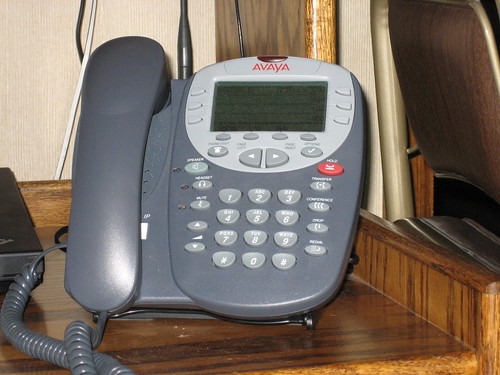
In Asterisk, WiFi, HomePlug, and an Avaya SIP Phone, I talked about the Asterisk PBX in the secure underground Digital Aggregates Corporation computer center (it's a Dell PC in the basement). I've successfully used a number of SIP endpoints with the PBX, including an Avaya 4610SW SIP hardphone and several PC-based SIP softphones. I've wanted a mobile WiFi SIP phone to use around the house and office but I wasn't terribly impressed with either the price or the quality of any of commercial options.

I recently installed the third-party (and quite experimental) Internet Communications Software Update for the N800 from Maemo which includes a SIP stack. It extends the existing internet capabilities of the N800 to include a SIP softphone. So far, initial testing has achieved an occasional two-way talk path. Debugging continues, and it's entirely possible that this is pilot error on my part. Still, I am much encouraged by the prospect of a pocket sized universal internet appliance, something I've sought ever since I used my first Palm PDA years ago.

In If Java is the new Cobol, is C++ the new assembly? I talked about how I thought Java was really underutilized in the U.S. as compared to Europe and Japan in using it as a platform for embedded applications. I made an economic argument based on cost of goods sold, not because Java is the hip thing to be using. (I'm told by those in the know that Ruby On Rails is the hip thing to be using.)

I'm using this little project as an excuse to play with Java Micro Edition (ME) in the Connected Device Configuration (CDC) by installing the C Virtual Machine (CVM) package for the N800 from the open source PhoneMe project. About all I've done so far is get the provided test suite to run successfully, and learn that you can't run applications on the N800 from the SD flash card. Still, it's a step in the right direction.

Hand-held networked universal appliances have been a staple in science fiction. I think they're near to becoming a commercial reality today. Mobile phones are close. Devices like the N800 are closer.

Monday, July 23, 2007

All Things Are Temporary

As if I needed any more evidence that life is too short, I was provided with some on Sunday, July 22nd, that I would have much preferred to do without. My old friend, occasional colleague, and frequent shooting buddy Paul Hyder died that morning after suffering the second of two strokes in the span of a little over a week. I had just sent him a get-well card, and was idly wondering when I could get him back out on the shooting range, and what help I might be able to give him, when his wife Marti notified many of us of his passing. Paul was barely 56.

Paul and I had worked together as engineers as the National Center for Atmospheric Research in Boulder Colorado over ten years ago and discovered that we had many shared interests: technology, science fiction, firearms, and a warped sense of humor. Mrs. Overclock (a.k.a. Dr. Overclock, Medicine Woman) and I were happy to be frequent recipients of he and his wife's gracious hospitality at their mountain home in Evergreen, where we enjoyed the company of their eclectic group of friends. We liked going out to dinner with Paul and Marti, and I for one always took advantage of his interest in gourmet food and wine. Paul was my go-to guy for tips on great new restaurants.

Paul and I were both members of a private outdoor shooting range in the foothills, where several times a year we would meet for a morning of shooting or to take a tactical class together. We did all the usual guy things: blowed stuff up real good, did tactical drills together, discussed who had the cooler firearm (I did), who was the better shot (he was), and just generally enjoyed each other's company while being outdoors in the great state of Colorado. Our interest in this past-time was such that I vividly remember us going one day in the dead of winter when it was so cold, we could only shoot a few rounds before retiring to his truck to defrost. Common sense finally prevailed and we beat a tactical retreat to the nearest good restaurant.

It will take some time for me to get used to the idea of life without Paul Hyder: his quirky personality, his mountain-man appearance, his sense of humor, his deep technical knowledge of networking, and his Glock 10mm. When my mom died in 2006, I am a little ashamed to admit that in the weeks and months afterwards, I found myself thinking about her more than I did when she was alive. When my friend and colleague Mark Uris died just a few months ago (also at age 56), I found it to be true again. I'm sure it will be the same for Paul.

We should never take our family and friends for granted. All things are temporary.

Friday, July 20, 2007

One Hundred Books

I've been accused of making good use of back of the envelope calculations, so called because they are historically done on the back of scrap paper like an old envelope. I'm a big proponent of these simple calculations, which often take the form of a kind of thought experiment. They can sometimes change your entire perspective on whatever problem is at hand.

Computer scientist Jon Bentley wrote a column called Programming Pearls for the journal Communications of the ACM, the articles of which were later collected into a book by the same name. He devoted a chapter to back of the envelope calculations. He discussed how to use simple arithmetical techniques to do things like estimate answers to complex questions, do performance estimates, and compute safety factors. Some of the tips he gives for back of the envelope calculations are two answers are better than one (if you arrive at similar answers by following two different paths, you are more likely to be in the ballpark), quick checks (be sure that the magnitude of your answer makes sense in the real world), and (quoting Albert Einstein) everything should be made as simple as possible, but no simpler.

I recently did a simple back of the envelope calculation to do a little self-discovery, and the result surprised me.

Mrs. Overclock (a.k.a. Dr. Overclock, Medicine Woman) and I share a lot of the same tastes in books. We met thirty years ago as college students in a science fiction club. But our literary interests diverge when it comes to fantasy. Yes, I enjoyed Tolkein's Lord of the Rings. Susanna Clarke's Hugo-winning Jonathan Strange & Mr Norrell was probably the best fiction book I read last year. But Mrs. Overclock finds it irritating (to say the least) when I say that when it comes to whatever latest epic fantasy she's reading, life is too short. My friend Tamarra Noirot, who is also an avid science fiction and fantasy reader, says that I am just not sophisticated enough to appreciate a good alternate history fantasy dragon story. She's undoubtedly right.

But to put things in perspective, let's do a back of the envelope calculation.

I am fifty-one years old. I have maybe twenty more productive reading years left in me. Could be more, but it's not likely to be decades more. Could be less, particularly if I keep pursuing hobbies of potential lethality. But twenty years is a good upper bound. And choosing the number twenty, rather than twenty-one or nineteen, makes the math easy and will yield an answer that is close enough. Doing something like trying to calculate my expected longevity using actuarial tables is way too much work and definitely not in the spirit of the back of the envelope, not to mention completely unnecessary.

I read a lot. In a year, I read about twenty books. Some years more, some years less. Of course, I read a lot more than just those twenty books. I read most of BusinessWeek and Newsweek every week, and just about all of Esquire, Wired, and Dr. Dobbs every month. I also read the occasional motorcycle and shooting magazine, as well as perusing IEEE technical journals, white papers, the occasional article in Harvard Business Review, and a slew of blogs I subscribe to via Google Reader. Can't miss any of Stuff On My Cat. But twenty books a year is in the ballpark.

Twenty years times twenty books a year yields four hundred books.

Of those four hundred books, about half will be fiction. The other half are non-fiction books like Freakonomics, Blink, The World Is Flat, or Peopleware. That leaves two hundred fiction books.

Of those two hundred fiction books, about half will be speculative fiction. The other half are other genres like mainstream or detective novels. I'm partial to Robert B. Parker, but I also read bestsellers like, recently, Special Topics in Calamity Physics and The Road. (The Road won the Pulitzer Prize, but it's not the feel good book of the year, unless the image of babies turning on a spit over an open fire makes you feel good. It's the kind of book that leads you to suddenly see the wisdom in a gun safe full of tactical weapons in your basement.) That leaves one hundred science fiction books.

One hundred science fiction books. Maybe more, but not ten times more, probably not even twice as many. Maybe less. Maybe a lot less. One hundred science fiction books spread out over the rest of my entire life.

When I arrived that estimate, it was a sobering revelation. No wonder I'm so damned picky about who and what I read. Life really is too short to read stuff I'm not really interested in.

Through a similar back of the envelope calculation, I can arrive at the conclusion that life is also too short to do work that I'm not really interested in, or not really good at, or spend time in a job I don't really love. It's too short to spend any of it with people I don't like. Bob Sutton arrived at the same conclusion through a different route in his latest book, The No Asshole Rule. Unless you happen to be immortal, a similar calculation will apply to you.

I'm currently reading The Three Musketeers by Alexandre Dumas. First published in 1844, it is a classic that has stood the test of time. Three hundred and ninety nine more to go.

Cardinal Richelieu is my role model.